
Kove Jewelry
Natural Diamond vs Lab-Grown Diamond: What's the Real Difference?
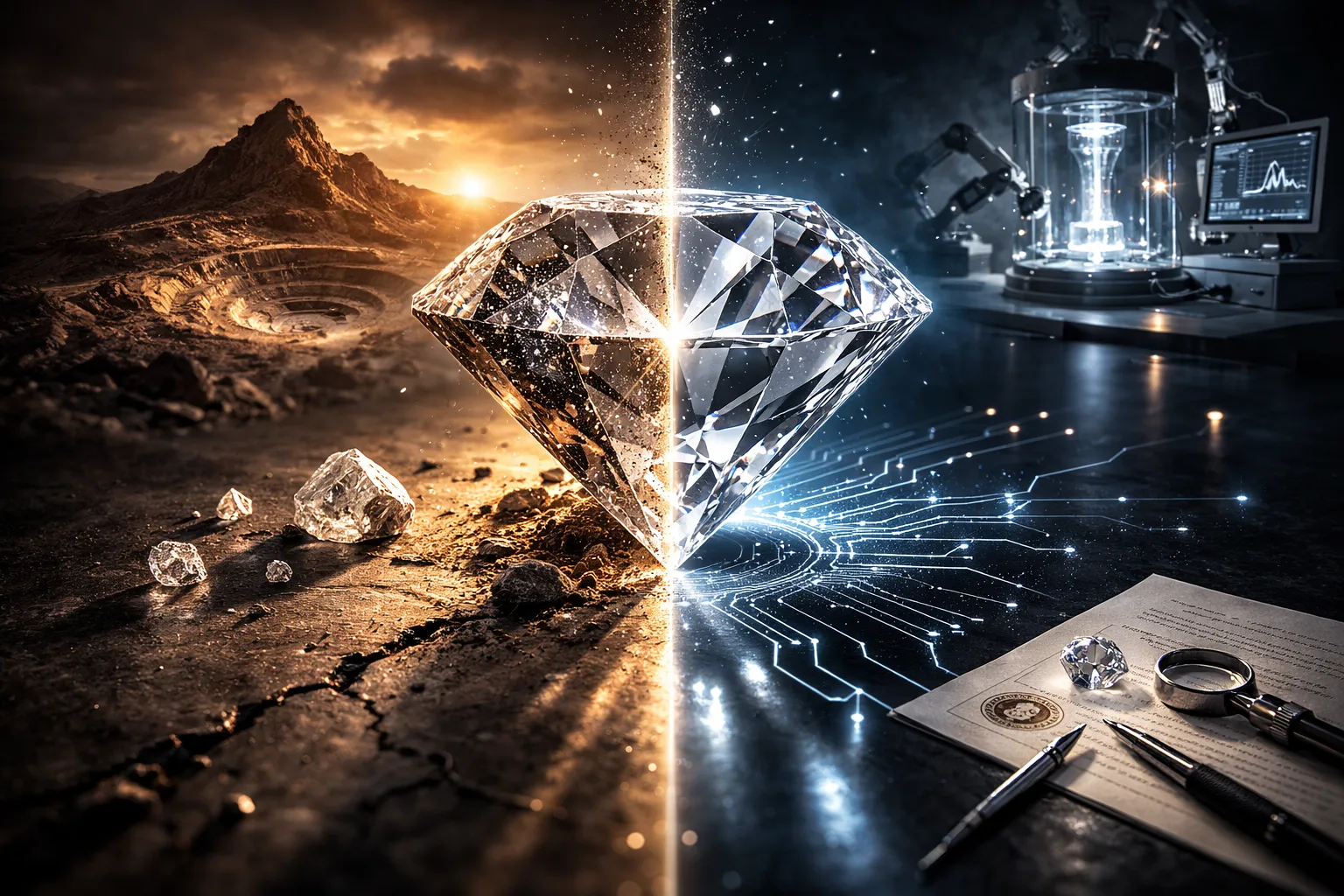
When choosing diamond jewelry, you'll encounter both natural diamonds and lab-grown diamonds. Understanding the real differences between them helps you make an informed decision that matches your values and budget.
Same Diamond, Different Origin
Lab-grown diamonds have essentially the same chemical, physical, and optical properties as natural diamonds. Both are made of crystallized carbon with the same hardness, brilliance, and structure. The primary difference is their origin: natural diamonds formed deep in the Earth over millions of years, while lab-grown diamonds are created in controlled laboratory environments over weeks or months using advanced technology.
Lab-Grown Diamonds vs Diamond Simulants
It's important to understand that lab-grown diamonds are not the same as diamond simulants like moissanite or cubic zirconia. Lab-grown diamonds are real diamonds with the same carbon crystal structure. Moissanite is silicon carbide, and cubic zirconia is zirconium dioxide - completely different materials that only resemble diamonds visually but have different properties, brilliance patterns, and durability.
Visual Difference and Brilliance
For most people, there is no visible difference between a natural diamond and a lab-grown diamond of comparable quality. Both reflect light in the same way and display the same fire and brilliance. Even professional jewelers typically cannot distinguish them without specialized equipment. The quality of cut, clarity, and color affects appearance far more than the origin.
The Greenhouse Flower Analogy
Think of it like flowers: a rose grown in a greenhouse is still a real rose, with the same biology, beauty, and fragrance as one grown in a garden. The environment where it grew doesn't change what it fundamentally is. Similarly, a lab-grown diamond is a real diamond, just created in a different environment than a natural one.
Durability and Hardness
Both natural and lab-grown diamonds rate 10 on the Mohs hardness scale, making them the hardest known natural material. This means both are equally durable and suitable for everyday wear, including engagement rings. They resist scratching and maintain their brilliance over time in the same way.
The Practical Difference: Price
The most significant practical difference is price. Lab-grown diamonds typically cost 30-70% less than comparable natural diamonds. This price difference reflects the production method and market dynamics, not a difference in quality or durability. For many buyers, this means access to larger or higher-quality stones within the same budget.
Who Chooses Natural Diamonds
Many people choose natural diamonds for their geological rarity and natural origin. Some value the traditional symbolism or the fact that each natural diamond is billions of years old and truly one-of-a-kind in its formation story. For these buyers, the natural origin itself holds meaning beyond the physical properties.
Who Chooses Lab-Grown Diamonds
Lab-grown diamonds appeal to buyers who prioritize value, transparency, and practical considerations. These diamonds offer the same beauty and durability at a more accessible price point. Many younger buyers appreciate the modern production methods and the ability to get more diamond for their budget without compromising on quality.
Making Your Choice
There is no universally "better" choice - it depends on what matters most to you. Both are real diamonds with the same physical properties. Whether you prefer the geological rarity of natural diamonds or the value proposition of lab-grown diamonds, the most important factors are quality, certification, and choosing a piece you truly love.
Explore Our Diamond Jewelry
Browse our collection featuring both natural and lab-grown diamonds in premium gold settings.